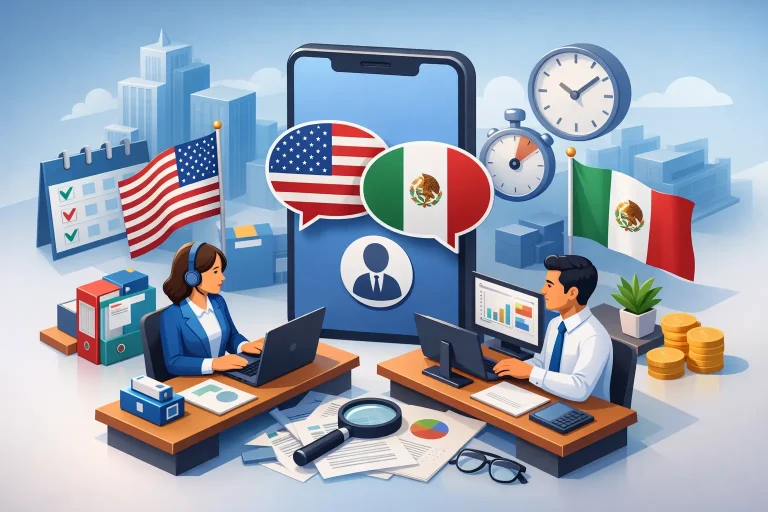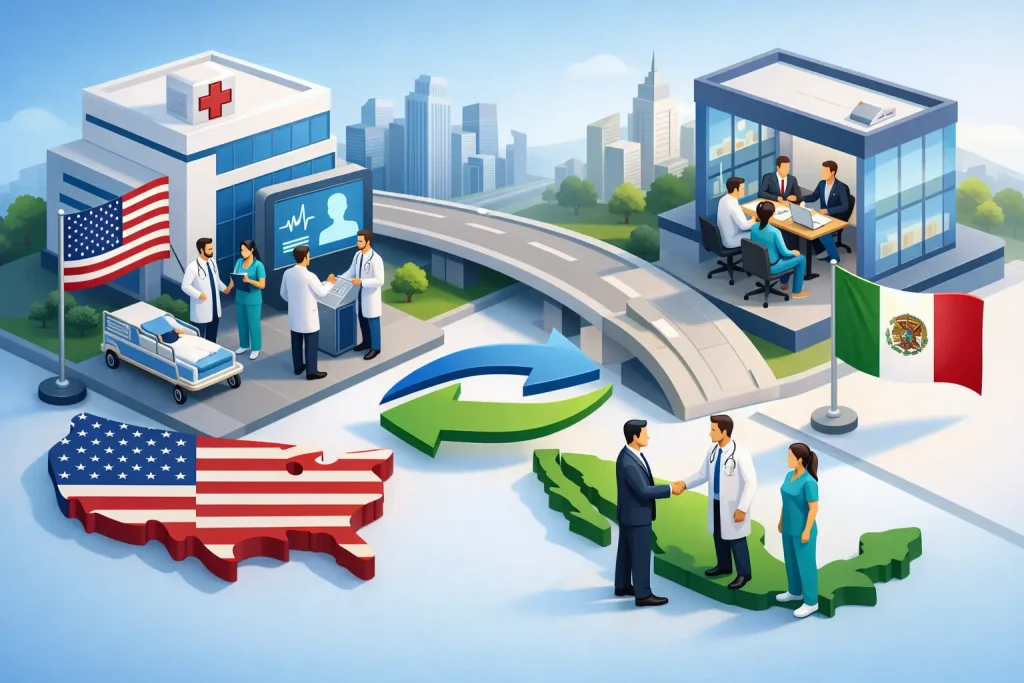
A medical group can have solid patient demand, strong leadership, and clear growth plans – and still get stuck because hiring takes too long. Front-desk gaps, billing delays, prior authorization backlogs, and overloaded intake teams create expensive drag. That is why healthcare staffing Mexico is getting serious attention from US operators who need capacity fast without adding unsustainable payroll overhead.
This is not just a labor arbitrage play. For healthcare organizations and healthcare-adjacent companies, the real value is operational leverage. The right nearshore staffing model helps teams add bilingual support, extend coverage, reduce administrative strain, and keep core functions moving during periods of growth or turnover.
Why healthcare staffing Mexico is gaining traction
The pressure on US healthcare hiring is not temporary. Wage inflation, turnover, and persistent shortages have made it harder to staff both patient-facing and back-office functions. At the same time, many healthcare businesses are expected to do more with tighter margins.
Mexico has become a practical answer because it solves several problems at once. Employers gain access to a large bilingual talent pool, real-time collaboration during US business hours, and lower employment costs than domestic hiring. That combination matters most in roles where responsiveness, accuracy, and communication directly affect revenue and service quality.
Geography also changes the working relationship. When teams are operating in the same or similar time zones, managers do not have to wait overnight for updates. Handoffs are easier. Training is faster. Daily oversight is far more realistic than it is with teams on the other side of the world.
For healthcare leaders, that means nearshoring can support growth without creating a management burden that offsets the savings.
Which roles make sense for nearshore healthcare staffing
Not every role should move, and that is where many companies get this wrong. The best results come from placing the right functions in a nearshore model rather than trying to relocate everything.
Administrative and operational roles are often the strongest fit. Patient intake support, appointment scheduling, insurance verification, medical billing support, collections support, referral coordination, prior authorization support, care coordination administration, and customer service are all functions that can benefit from a structured nearshore team.
Revenue cycle work is another major opportunity. When billing teams are short-staffed, cash flow suffers quickly. Claims follow-up slows down. Documentation queues build. Denials may rise simply because internal capacity cannot keep up. Adding trained support in Mexico can help stabilize these workflows while lowering cost per hire.
Healthcare organizations also use nearshore staffing for compliance support, data entry, document management, reporting, provider enrollment support, and call center operations. In healthcare-adjacent businesses such as medical device firms, MSOs, digital health companies, and healthcare SaaS platforms, the model can also extend to sales support, technical support, and back-office operations.
The line is usually clear. If a role requires strong process discipline, consistent communication, secure systems access, and close coordination with a US team, it may be a strong candidate. If it depends heavily on local licensing, in-person clinical work, or complex state-specific judgment calls, it may need to remain onshore.
Cost savings matter, but control matters more
Many buyers start with cost, and that makes sense. Hiring in Mexico can reduce labor expense significantly compared with equivalent US-based roles. But experienced operators usually stay focused on a bigger question: can this team perform consistently under our standards?
That is where the staffing model matters more than the geography alone. A low-cost hire is not useful if training is weak, turnover is high, or performance is hard to manage. Healthcare organizations need dependable execution, clear accountability, and secure operating conditions.
A strong nearshore partner should help you maintain control over process design, performance expectations, and day-to-day management. You are not outsourcing outcomes blindly. You are building a dedicated team that works as an extension of your operation.
This distinction is especially important in healthcare support functions where accuracy, responsiveness, and documentation quality can affect reimbursement, patient experience, and compliance exposure.
What to evaluate before you choose a partner
If you are considering healthcare staffing Mexico, speed should not be the only selling point. Fast hiring is helpful, but only if the talent quality, infrastructure, and oversight model are strong enough to support long-term execution.
Start with role alignment. A partner should understand the difference between a general administrative coordinator and a prior authorization specialist. They should know which roles require bilingual fluency, which require healthcare workflow familiarity, and which require process maturity more than industry depth.
Next, look at operating structure. Ask how candidates are sourced, screened, and trained. Ask how performance is managed after placement. Ask what happens if a hire is not working out. In healthcare, the support around the employee can matter almost as much as the employee.
Security and compliance expectations should also be part of the conversation early. Even when nearshore team members are not making clinical decisions, they may still work around sensitive data, payer documentation, or regulated workflows. You need a staffing environment that reflects those realities with secure systems, controlled access, and disciplined management practices.
Finally, consider scalability. It is one thing to place one role. It is another to build a repeatable hiring engine that can support five, ten, or twenty hires across multiple functions. If growth is your goal, choose a partner that can expand with you without sacrificing quality.
Why Guadalajara stands out for healthcare staffing
Not every talent market in Mexico offers the same advantages. Guadalajara stands out because it combines scale, education, and business infrastructure in a way that supports sustained team building.
The city has a deep professional talent base across operations, customer support, finance, technology, and administrative functions. That matters for healthcare employers because many support roles sit at the intersection of service, documentation, and systems work. You need people who can communicate clearly, follow detailed processes, and adapt to changing workflows.
Guadalajara also supports a more controlled operating model. For companies that want dedicated office environments, stronger oversight, and a professional infrastructure that aligns with US business expectations, the city offers a clear advantage. This is one reason firms like GDL Connect position Guadalajara as more than a cost-saving location. It is a practical operating hub for companies that need lower costs without lowering standards.
The trade-offs leaders should think through
Nearshoring is effective, but it is not automatic. The biggest mistake is assuming a new geography will fix a broken process. If your workflows are inconsistent, training is undocumented, or role expectations are vague, a nearshore team will inherit those same problems.
There are also onboarding realities. Even excellent hires need ramp time. Healthcare workflows are detail-heavy, and payer rules, internal systems, and escalation protocols vary by organization. Teams that invest in structured onboarding usually see stronger results than teams that expect instant productivity.
Language and cultural alignment are often strengths in Mexico, but they still require role-specific evaluation. A bilingual candidate may be strong conversationally and still need coaching on healthcare terminology, patient communication standards, or documentation precision.
And not every function belongs offshore or nearshore. Some roles should remain local because they depend on direct patient interaction, state-specific expertise, or highly specialized credentials. Smart staffing strategies are usually hybrid, not all-or-nothing.
How to make the model work
The most successful healthcare organizations treat nearshore staffing like a growth system, not a one-time fix. They start with a few roles that are process-driven, measurable, and operationally urgent. They document workflows, define metrics, and assign clear ownership for onboarding.
From there, they expand based on performance. One scheduling coordinator becomes a scheduling pod. One billing support hire turns into a broader revenue cycle team. What begins as a cost-saving move becomes a more scalable operating model.
That is the real opportunity. Healthcare staffing Mexico can help reduce hiring pressure, but the bigger win is building a team structure that gives you more flexibility as demand changes. When done well, nearshoring improves response times, protects margins, and gives leadership more room to grow without constant recruiting friction.
Healthcare companies do not need more hiring theory. They need dependable capacity, better economics, and a staffing model they can actually manage. The right nearshore team gives you all three – and that can change the pace of the business.