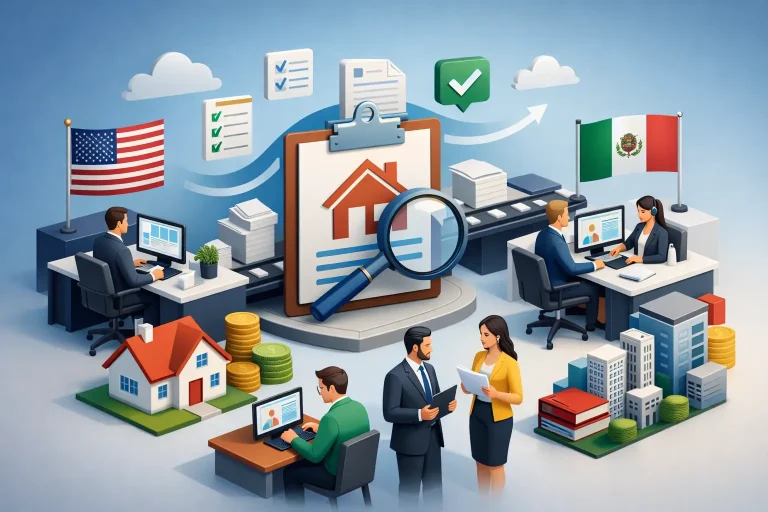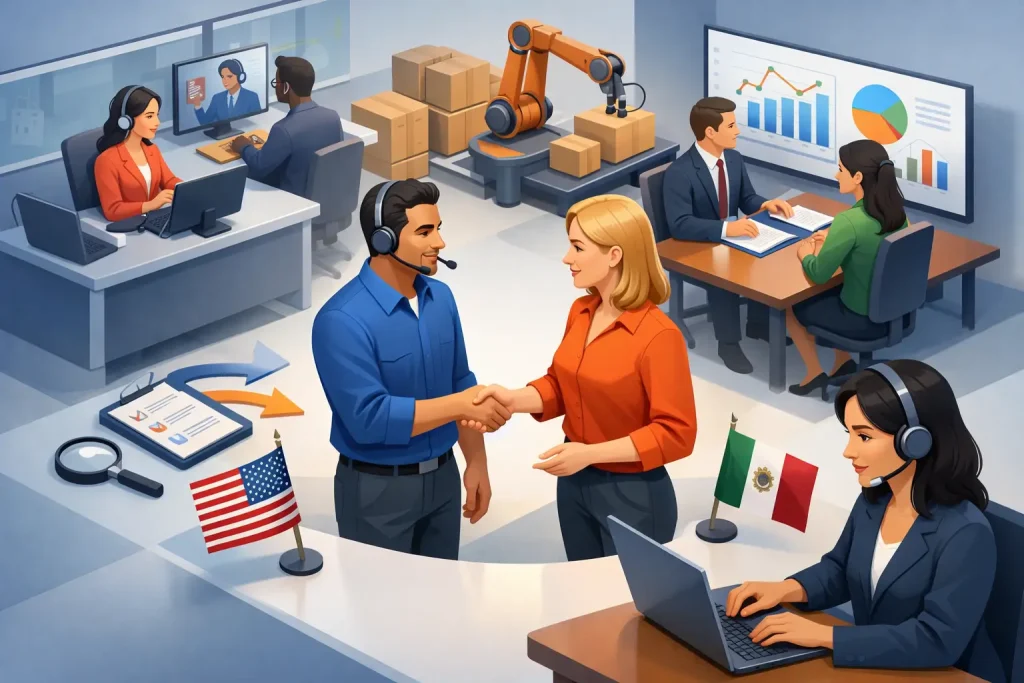
A missed handoff between an English-speaking customer and a Spanish-speaking operations team can create more than a communication problem. It can delay a loan file, frustrate a patient, stall a real estate transaction, or cost a sale. Bilingual staffing gives US companies the capacity to serve both sides of that conversation while building a more flexible, cost-conscious operation.
For growing businesses, the value is not simply finding people who speak two languages. It is building dedicated teams that understand the work, communicate clearly with US stakeholders, and can perform reliably during the same business day. When done well, bilingual talent becomes an operating advantage across customer-facing, administrative, technical, and compliance-sensitive functions.
Why Bilingual Staffing Is a Business Advantage
Language capability affects speed, quality, and customer confidence. A bilingual employee can reduce the number of handoffs required to answer a customer question, clarify documentation, schedule an appointment, or resolve an account issue. Fewer handoffs mean less waiting, fewer errors, and a more consistent experience.
That matters especially in industries where precision and responsiveness are tied directly to revenue or risk. A mortgage processor may need to follow up with Spanish-speaking borrowers. A healthcare support team may need to help patients understand scheduling or billing questions. A property management company may need clear tenant communication. In each case, language fluency must be paired with role-specific judgment and process discipline.
The economic case is equally practical. Domestic hiring remains expensive, and many companies face long recruiting cycles for roles that need both functional expertise and Spanish-English fluency. Nearshore bilingual teams can expand capacity at a lower cost while preserving the real-time collaboration that leaders expect from an extension of their internal workforce.
Bilingual Staffing Works Best When the Role Is Clear
Bilingual capability is valuable, but it is not a substitute for a well-defined job. The strongest staffing outcomes begin with a precise understanding of what the person or team needs to own: the workflows, systems, escalation paths, performance metrics, and level of customer interaction.
For example, a bilingual customer support representative may need to manage inbound calls, document cases accurately in a CRM, and recognize when an issue requires escalation. A bilingual transaction coordinator may need to track deadlines, request documents, communicate status updates, and protect sensitive information. Both roles require language skills, but their hiring profiles, training plans, and quality standards are very different.
Before adding headcount, define whether the role is primarily customer-facing, process-driven, technical, or a mix of all three. This helps prevent a common mistake: hiring for language ability first and discovering later that the candidate lacks the workflow knowledge or attention to detail the function requires.
Customer-Facing Teams Need More Than Translation
In sales, service, insurance, and healthcare support, bilingual employees represent the company in moments that shape trust. They need to communicate naturally, not translate scripts word for word. They also need to understand the product, the customer journey, and the boundaries of their role.
A good bilingual support model includes approved messaging, clear escalation procedures, CRM standards, and ongoing quality review. This protects the customer experience while giving the team enough structure to work efficiently. It is particularly important when conversations involve financial information, health-related details, contracts, or other sensitive matters.
Back-Office Roles Benefit From Faster, Cleaner Coordination
Bilingual talent also creates value behind the scenes. Operations support, accounting assistance, document processing, post-closing, compliance administration, and data management often involve communication across US-based clients, internal teams, and Spanish-speaking customers or partners.
In these roles, clarity can prevent rework. A team member who can review information, request missing documents, explain next steps, and update systems without creating a language gap keeps work moving. The result is not just better communication. It is more predictable throughput.
Why Nearshore Teams Fit US Operating Models
Offshore staffing can lower labor costs, but distance and time-zone separation can create friction when teams need frequent collaboration. Nearshore staffing in Mexico offers a different operating model. US companies can work with bilingual professionals during overlapping business hours, hold live meetings, manage urgent requests, and maintain daily visibility into priorities.
Guadalajara is particularly well positioned for companies that need a deep pool of bilingual talent across operations, technology, finance, customer support, and specialized administrative functions. Its proximity to the US supports faster communication and easier leadership oversight than a team located half a world away.
This does not mean every role should be nearshored. A highly strategic executive function, a role requiring a specific US license, or work that demands constant in-person presence may remain best handled domestically. The opportunity is to identify the work that can be performed at a high level by a dedicated nearshore team without adding unnecessary cost to the business.
Where Bilingual Teams Create Immediate Capacity
The most effective use cases are usually functions with repeatable workflows, measurable outputs, and a need for consistent communication. Companies often begin with one role or a small pod, then add capacity after the team proves its value.
Bilingual staffing is especially useful across these areas:
- Customer service, appointment setting, intake, and account support
- Sales development, lead follow-up, and CRM administration
- Mortgage processing, transaction coordination, post-closing, and document review
- Healthcare scheduling, eligibility support, billing assistance, and patient communications
- Accounting support, collections follow-up, reconciliation, and administrative finance work
- Software engineering, quality assurance, AI engineering, and technical support
- Marketing operations, campaign coordination, content support, and reporting
The right starting point depends on the business bottleneck. If a sales team is losing leads because follow-up takes too long, bilingual sales support may create the quickest return. If operations leaders are buried in documentation and status updates, a trained coordination team may have a greater impact. Start where extra capacity will improve a metric that matters.
How to Build a Bilingual Team Without Losing Control
Cost savings should never come at the expense of accountability. Treat a nearshore bilingual team as part of the operating model, not as a disconnected vendor resource. That means giving team members access to the right tools, documented processes, clear ownership, and regular management attention.
Begin with a scorecard for each role. Define expected turnaround times, quality standards, volume targets, communication expectations, and escalation rules. If the role handles sensitive data, establish access controls and training requirements before the employee begins work. In regulated industries, this step is essential.
Training should cover more than the task list. New team members need context on how the business makes money, what customers expect, and what a strong outcome looks like. A processor who understands why a delayed document affects a closing will make better decisions than someone who sees the task as a checkbox.
Management cadence also matters. Short daily check-ins can keep work aligned, while weekly reviews can surface workflow issues, training needs, and capacity constraints. The goal is not micromanagement. It is maintaining visibility early enough to solve problems before they become expensive.
The Trade-Offs to Address Up Front
Bilingual staffing is powerful, but it requires intentional execution. Fluency levels vary, so assess whether a role needs conversational Spanish, professional business communication, or highly specialized terminology. A customer support role may require excellent spoken fluency, while a data-focused operations role may place more weight on written communication and system accuracy.
Cultural alignment should also be evaluated, especially for customer-facing work. The best candidates understand how US customers expect conversations to flow, how to communicate clearly without sounding scripted, and when to escalate an issue. Structured interviews, role-play scenarios, and practical skills assessments can reveal this more effectively than a language claim on a resume.
Finally, avoid treating a bilingual team as a short-term patch for an understaffed department. If the work is ongoing, invest in documentation, onboarding, performance management, and career development. That approach improves retention and turns added headcount into dependable operating capacity.
Make Language Capability Part of Your Growth Plan
The strongest teams do not merely answer in two languages. They reduce friction between customers, systems, and departments while giving leaders more room to scale. For US businesses facing payroll pressure, hiring delays, or a growing Spanish-speaking customer base, that combination can be a meaningful competitive advantage.
GDL Connect helps businesses build dedicated bilingual teams in Guadalajara for the roles that keep revenue moving and operations under control. The practical next step is to identify the work that is slowing your team down, define the outcomes that role must deliver, and build capacity around those requirements.