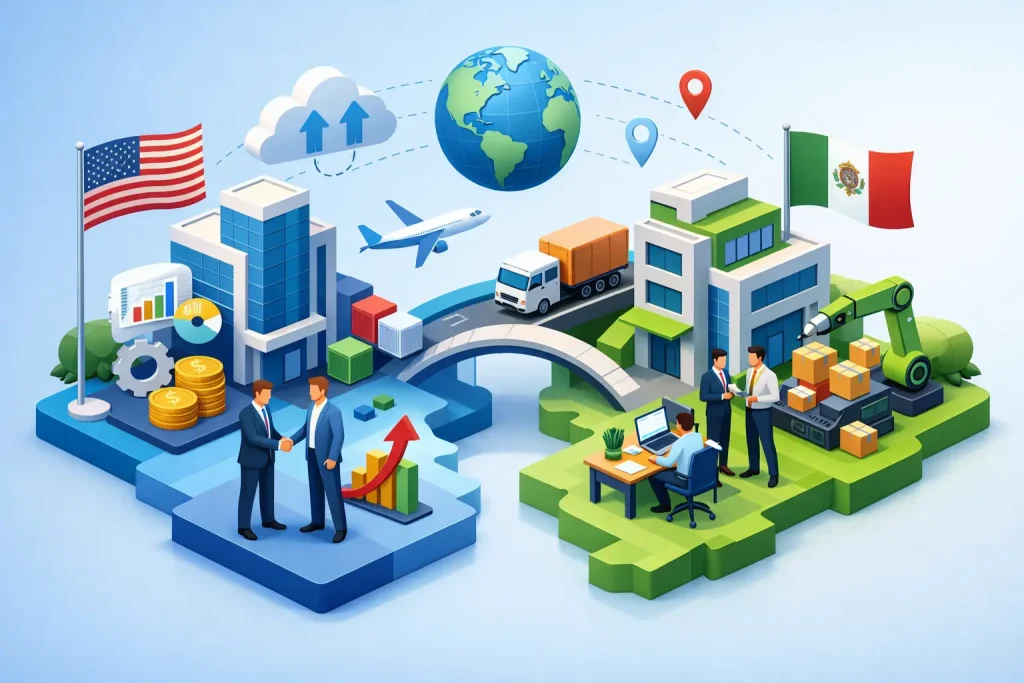
A hiring delay in operations, finance, or customer support does not stay contained for long. It spills into revenue, service levels, and leadership bandwidth. That is why the top benefits of nearshoring matter so much for US companies trying to grow without adding unnecessary cost or complexity.
For many businesses, nearshoring is not just a labor strategy. It is an operating model that makes scaling more practical. When done well, it gives you access to qualified talent, lower overhead, and tighter collaboration than most offshore setups can offer. The result is a team structure that supports growth instead of slowing it down.
Top benefits of nearshoring for US businesses
Nearshoring works because it solves several business problems at once. It can reduce payroll pressure, improve hiring speed, and make day-to-day management easier. For companies that need dependable support in technical, operational, financial, or customer-facing roles, those gains add up quickly.
1. Lower labor costs without sacrificing capability
Cost savings is usually the first reason companies consider nearshoring, and for good reason. Hiring in the US has become more expensive across nearly every function, from customer support and transaction coordination to software engineering and accounting. Nearshoring can reduce that burden while still giving you access to experienced professionals.
The key point is that lower cost does not have to mean lower standards. In strong talent markets, companies can hire bilingual, skilled team members at a significantly lower total cost than comparable domestic roles. That creates room in the budget for growth, margin protection, or reinvestment in revenue-driving initiatives.
Of course, cost should not be the only filter. If a provider cannot maintain quality, stability, and accountability, the apparent savings disappear fast. The real advantage comes from lowering cost while keeping performance high.
2. Faster hiring in hard-to-fill roles
Open roles create drag. Teams get stretched, managers absorb extra work, and customer response times start to slip. Nearshoring helps solve this by expanding your access to talent beyond a single local market.
This is especially valuable in roles where US hiring can be slow, competitive, or inconsistent. Companies often struggle to fill positions in operations support, software development, compliance, accounting, healthcare administration, and sales support. A nearshore model can shorten that cycle by tapping into established talent pools that are already aligned with US business needs.
Speed matters most when the role ties directly to delivery or revenue. If your pipeline is growing but your support structure is not, every week of delay has a cost. Nearshoring gives companies a practical way to add capacity faster.
3. Better time zone alignment and real-time collaboration
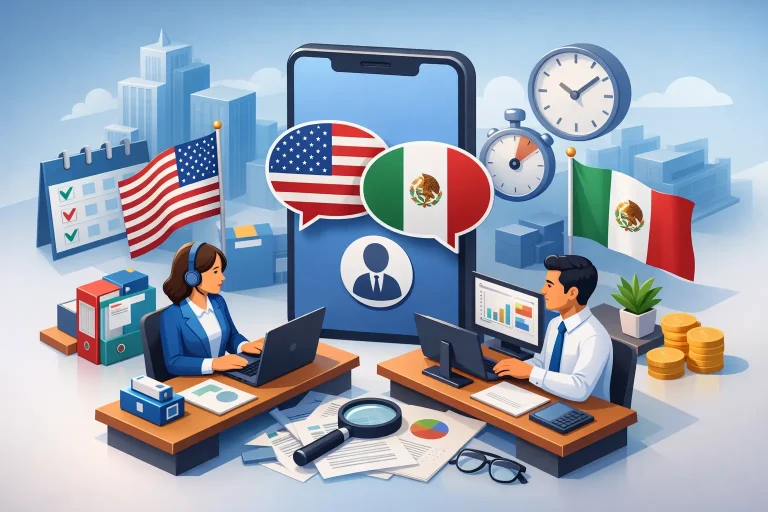
One of the top benefits of nearshoring is simple but powerful: your team is working when your business is working. That has a direct impact on productivity.
When employees are in or near US time zones, meetings are easier to schedule, decisions happen faster, and handoffs do not stall for a full day. Managers can coach in real time. Teams can solve issues while customers are still on the line. That kind of responsiveness is difficult to match with offshore teams operating 10 or 12 hours ahead.
This matters even more in functions that require frequent coordination, such as customer support, transaction processing, software development, post-closing, and compliance-heavy workflows. Nearshoring makes the operating rhythm feel more connected, which reduces friction across the business.
4. Stronger oversight and operational control
Many executives hesitate to outsource because they worry about losing visibility. That concern is valid. A low-cost model is not helpful if leadership cannot track performance, enforce standards, or maintain accountability.
Nearshoring offers a better balance between delegation and control. Because of the geographic proximity and working hour alignment, leaders can stay closely involved in training, communication, and performance management. It is easier to build routines, monitor output, and correct issues early.
This is where partner quality matters. A nearshore staffing model should not feel distant or opaque. It should give you a dedicated team structure, clear reporting, and the ability to manage outcomes with the same discipline you expect internally. For many businesses, that level of oversight is what makes nearshoring sustainable rather than temporary.
5. Access to bilingual, business-ready talent
Communication gaps create hidden costs. They slow execution, increase mistakes, and force managers to spend more time clarifying basic tasks. Nearshoring can reduce that risk by giving companies access to bilingual professionals who are used to supporting US clients and processes.
That language capability matters beyond customer-facing roles. It also improves internal coordination in finance, operations, technical support, and documentation-heavy functions. When employees can communicate clearly with both leadership and customers, the entire workflow becomes more efficient.
There is also a broader cultural advantage. Nearshore teams in established business hubs are often highly familiar with US workplace expectations around responsiveness, service quality, and accountability. That does not eliminate onboarding needs, but it can shorten the learning curve.
6. A larger talent pool for specialized work
Nearshoring is often associated with support roles, but that view is too narrow. One of the strongest advantages is access to specialized professionals in fields where hiring pressure is high.
Companies can use nearshoring to build teams across software engineering, AI engineering, accounting, insurance support, mortgage operations, healthcare administration, marketing execution, and compliance functions. In the right market, businesses are not choosing between affordability and expertise. They are getting both in a more flexible structure.
This is particularly useful for companies in regulated or detail-heavy industries. They need more than general staffing support. They need people who can work within defined processes, documentation standards, and service expectations. A strong nearshore model makes that possible without forcing every hire into a high-cost domestic market.
7. Easier scaling with less operational strain
Growth creates pressure in waves. A company lands new clients, enters a busy season, launches a product, or absorbs a spike in transactions. The challenge is not just hiring. It is hiring in a way that does not disrupt the core business.
Nearshoring gives companies a more flexible path to scale. Teams can expand by function, by department, or by workload without requiring a full internal recruiting buildout. That helps leaders respond faster when demand changes.
There is still a planning component. Not every role should be moved externally, and not every process is ready to scale immediately. But when the model is structured well, nearshoring reduces the operational strain that usually comes with rapid growth. It allows leadership to add capacity without rebuilding the organization each time demand increases.
8. Reduced risk compared with traditional offshore models
Offshore outsourcing can still work in some cases, especially for businesses that prioritize cost above all else and can tolerate slower communication cycles. But for many US companies, the trade-offs are too expensive. Delayed responses, limited overlap, inconsistent oversight, and communication issues can erode the value quickly.
Nearshoring tends to offer a better risk profile. The shorter distance makes travel easier if needed. The closer business culture improves coordination. Shared or overlapping work hours support stronger management. In many cases, companies also gain more confidence around data handling, security practices, and compliance expectations when they choose a nearshore partner built for US clients.
That does not mean nearshoring is automatic success. Execution still matters. The right setup depends on the role type, management model, security requirements, and expected pace of hiring. But compared with traditional offshore arrangements, nearshoring often provides a more practical balance of savings, quality, and control.
Where nearshoring delivers the most value
Nearshoring is especially effective when a business needs repeatable output, dependable communication, and room to scale. That includes back-office operations, customer support, finance, technical roles, and process-driven functions where delays or errors can affect client experience.
It is also a strong fit for companies that are stuck between two bad choices: overpaying in a tight domestic labor market or outsourcing too far away and losing control. A nearshore model creates a middle path that is often more commercially sound.
For example, a mortgage company may use nearshoring to support processing, post-closing, and compliance workflows. A healthcare organization may add administrative support without slowing patient-facing teams. A software business may build engineering capacity faster while keeping collaboration tight. Different industries use the model differently, but the business logic is the same. Better capacity at a lower cost with fewer operational compromises.
A strategic nearshoring partner can make that shift easier by sourcing talent, supporting onboarding, and providing the structure needed to manage teams effectively. In markets like Guadalajara, companies can build high-performing teams that feel close to the business, not removed from it.
The real question is not whether nearshoring saves money. It is whether your current hiring model can keep up with your growth goals. If the answer is no, nearshoring may be the operational upgrade your business has needed for a while.