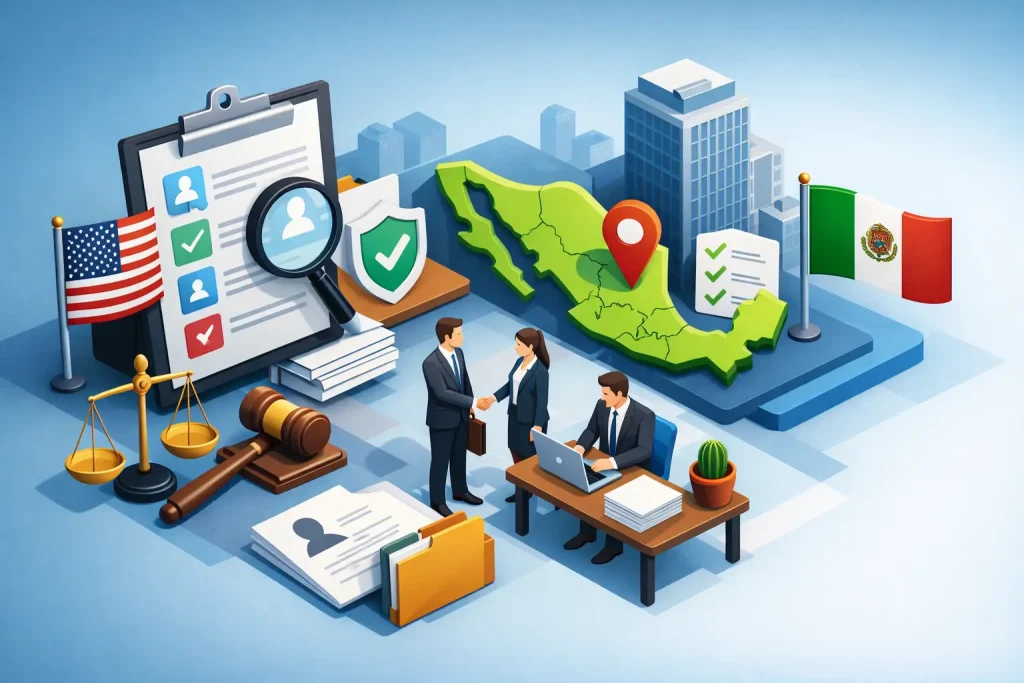
If your team needs to hire in Mexico quickly, compliance is where expansion either stays efficient or gets expensive fast. Companies trying to set up Mexico compliance hiring often focus on sourcing talent first and deal structure second. That order creates risk – especially when payroll, employment classification, benefits, data handling, and labor obligations are treated as cleanup work instead of part of the hiring model.
For growth-minded companies, the real question is not whether Mexico offers strong talent. It does. The question is how to access that talent without creating tax exposure, labor disputes, payroll errors, or operational drag. The right setup gives you speed, control, and cost efficiency. The wrong one can erase those gains.
What set up Mexico compliance hiring actually involves
Hiring compliantly in Mexico is not a single decision. It is a combination of legal structure, employment terms, payroll administration, statutory benefits, workplace policies, and day-to-day management practices.
At a minimum, you need to decide how workers will be engaged, who the legal employer is, how compensation will be processed, and how local labor requirements will be met. You also need to think beyond the offer letter. Compliance continues after onboarding through attendance, overtime, terminations, severance, benefits administration, and documentation.
This matters even more for US companies building support, finance, healthcare, mortgage, marketing, or technical teams. These roles often touch sensitive data, regulated workflows, and customer-facing processes. The hiring model has to support the work, not just fill the seat.
Start with the employment model, not the candidate search
The first major decision is whether you will hire through your own Mexican entity or work through a local staffing or employer partner. That choice shapes everything that follows.
Setting up your own entity can make sense if Mexico will become a major long-term operating center with significant headcount and in-country leadership. You gain direct control, but you also take on the full burden of registration, payroll, tax administration, labor compliance, HR operations, and local legal oversight. That route can be worthwhile, but it is rarely the fastest path.
For many US companies, partnering with an established nearshore staffing provider is the more practical option. It reduces setup time and lowers administrative complexity while still giving you operational oversight of the team. This is especially useful when you need to deploy talent quickly, validate the model, or scale by function before committing to a full legal footprint.
There is no universal answer here. If your hiring plan is modest, speed matters, and you want to avoid building local infrastructure from scratch, a partner-led model is often the cleaner choice. If you are building a large standalone Mexico operation, entity formation may be justified.
The biggest compliance risks US companies underestimate
When companies rush into cross-border hiring, the same issues tend to surface.
The first is worker classification. A contractor arrangement that looks simple on paper may not hold up if the person works like an employee in practice. If the company controls schedule, tools, reporting lines, and ongoing work, local authorities may view that relationship differently than the contract does.
The second is payroll and benefits administration. Mexico has statutory employment obligations that need to be handled correctly and on time. Missing required benefits, underreporting compensation, or using incomplete payroll processes can create liabilities that grow quietly until they become expensive.
The third is termination risk. Ending an employment relationship in Mexico is not handled the same way many US employers are used to. Termination rules, documentation, and severance exposure require planning from the beginning, not after a performance issue appears.
The fourth is compliance drift. A company may start with a clean structure but lose discipline over time. Informal overtime, inconsistent policies, undocumented compensation changes, or poor manager training can create problems even when the original setup was sound.
Set up Mexico compliance hiring with the right foundations
A compliant hiring structure starts with a few operational basics done well.
First, define the role clearly. Job scope, reporting lines, schedule expectations, compensation structure, and performance standards should be documented before recruiting begins. This helps with candidate alignment, but it also matters for employment documentation and internal controls.
Second, establish who will employ the worker. If that is your own Mexico entity, make sure registrations, tax IDs, labor obligations, and payroll processes are in place before the start date. If you are using a partner, confirm who carries employer responsibility and how compliance duties are divided.
Third, use employment agreements and policies that reflect Mexican labor requirements. Generic US documents usually do not cover what needs to be addressed locally. Terms around compensation, work conditions, confidentiality, benefits, and termination must align with the legal environment where the employee is actually working.
Fourth, set up payroll and statutory benefits correctly from day one. That includes salary processing, required contributions, paid leave obligations, and any mandated year-end or profit-related components that apply. Accuracy matters here because payroll issues damage both compliance and retention.
Fifth, put manager controls in place. Many compliance problems are created by frontline management habits rather than legal intent. If supervisors approve extra hours informally, shift duties outside the agreed role, or make undocumented compensation promises, risk rises quickly.
Why local execution matters more than generic legal advice
You can get general guidance from almost anywhere. Execution is harder.
The difference between a workable hiring model and a risky one usually comes down to local administration. Are contracts aligned to actual work conditions? Is payroll being processed accurately every cycle? Are benefits tracked correctly? Is employee documentation complete? Are managers operating within a framework that supports compliance?
This is where companies often lose time. Internal legal or finance teams may understand the high-level issue but not the local employment mechanics. The result is delay, patchwork processes, or overreliance on assumptions that do not hold up in practice.
A strong operating partner closes that gap. Instead of treating compliance as a legal checkbox, they build it into recruiting, onboarding, payroll, supervision, and retention. That approach is faster and usually more stable.
Compliance should support growth, not slow it down
Some executives hear compliance and assume bureaucracy. In reality, the right structure creates room to scale.
When your Mexico hiring model is set up correctly, leaders can focus on output instead of administrative firefighting. Finance gets cleaner cost visibility. Operations gets reliable staffing. Managers get teams that are easier to onboard and supervise. Candidates get a more professional experience, which improves acceptance and retention.
This is especially valuable in functions where speed and consistency matter. A mortgage support team, accounting group, software development pod, or healthcare operations team cannot perform well if employment setup is unstable behind the scenes. Compliance protects continuity.
It also protects the business case. Nearshoring works best when savings are paired with control. If cost reduction comes with hidden labor exposure, delayed hiring, or constant rework, the model starts losing its advantage.
What to look for in a Mexico hiring partner
If you are not building your own entity, your partner choice matters as much as your hiring plan. Look for a provider that can explain the compliance model in business terms, not just legal language.
You should know who employs the talent, how payroll is managed, how benefits are handled, what onboarding documents are used, how terminations are managed, and what level of operational oversight you will keep. You should also understand how quickly the partner can deploy teams in the functions you need.
The best partners do more than provide access to talent. They reduce execution risk while preserving accountability. In a market like Guadalajara, where strong bilingual talent is available across operations, finance, customer support, compliance, and tech, that combination is what turns hiring into a growth lever.
GDL Connect works with US companies that want that balance – lower labor costs, faster deployment, and a hiring structure that supports real operational control.
A practical way to think about the next step
If you are planning to hire in Mexico, do not start by asking how cheaply you can do it. Start by asking how cleanly you can do it. A compliant model is not the opposite of speed. It is what makes speed sustainable.
The right setup lets you add headcount with confidence, manage performance without friction, and expand capacity without building risk into the foundation. That is the version of nearshoring that actually scales.